

Blogs


From On-Prem to Colocation: Migrating Enterprise Workloads the Smart Way for Malaysia’s Growth
Malaysia is witnessing a strong expansion in its data centre sector. Reports place the market value near $6 billion in 2025. Projections indicate growth toward $11 billion to 16 billion by 2031. This rise connects directly to broader digital changes and increasing requirements for artificial intelligence across many sectors. On-premise arrangements place servers and related […]

Immersion Cooling: A Practical Guide for High-Density AI Datacentres
Artificial intelligence keeps pushing data centre power needs higher every month. Training one advanced model can use as much electricity as several hundred homes in a full year. In high density data centres, standard air-cooling systems struggle once racks exceed 50 kilowatts and temperatures climb quickly. Malaysia’s warm, humid weather adds to the challenge and […]

Designing Hyperscale & Hybrid Datacentres for Malaysia’s Growth
Malaysia keeps pushing forward in technology and digital services. Recent figures show the data centre market reached roughly $4 billion in 2024. Reports show it could reach more than $13 billion by 2030. Such numbers reflect the strong momentum in the Malaysian digital economy. More organizations need dependable systems to store and process information. Hyperscale […]
Integrating Renewable Energy Sources into Malaysia’s Expanding Data Center Ecosystem
Malaysia records steady expansion in its data center industry. Recent figures place the market value at around $6 billion in 2025. Forecasts point to growth beyond $11 billion by 2031. Electricity requirements increase quickly at the same time. Projections suggest demand could approach several gigawatts by 2030. The rise comes from higher AI processing needs […]
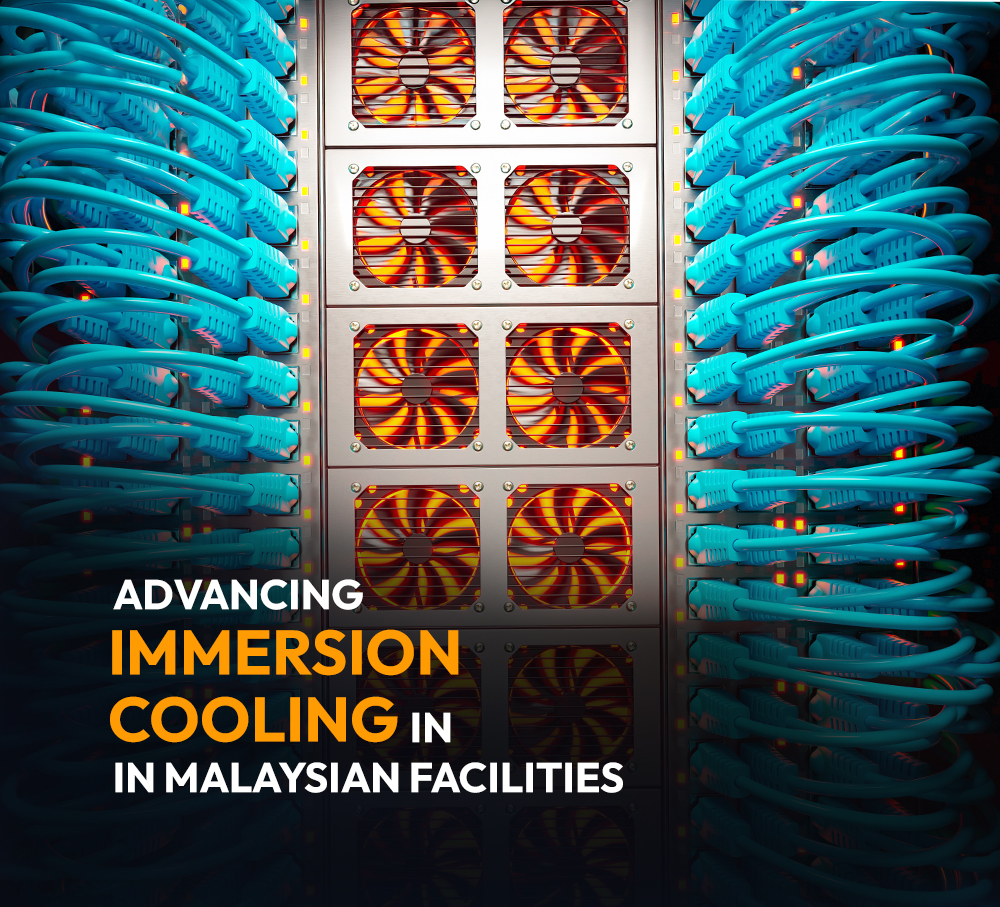
Advancing Immersion Cooling in Malaysian Facilities
Malaysia’s data center cooling market is set to expand from $0.21 billion in 2025 to $1.07 billion by 2031. This growth occurs at a 31 percent CAGR. AI demands push traditional air cooling to its limits because servers now run hotter and denser than ever before. Operators find it harder to keep equipment stable without […]