


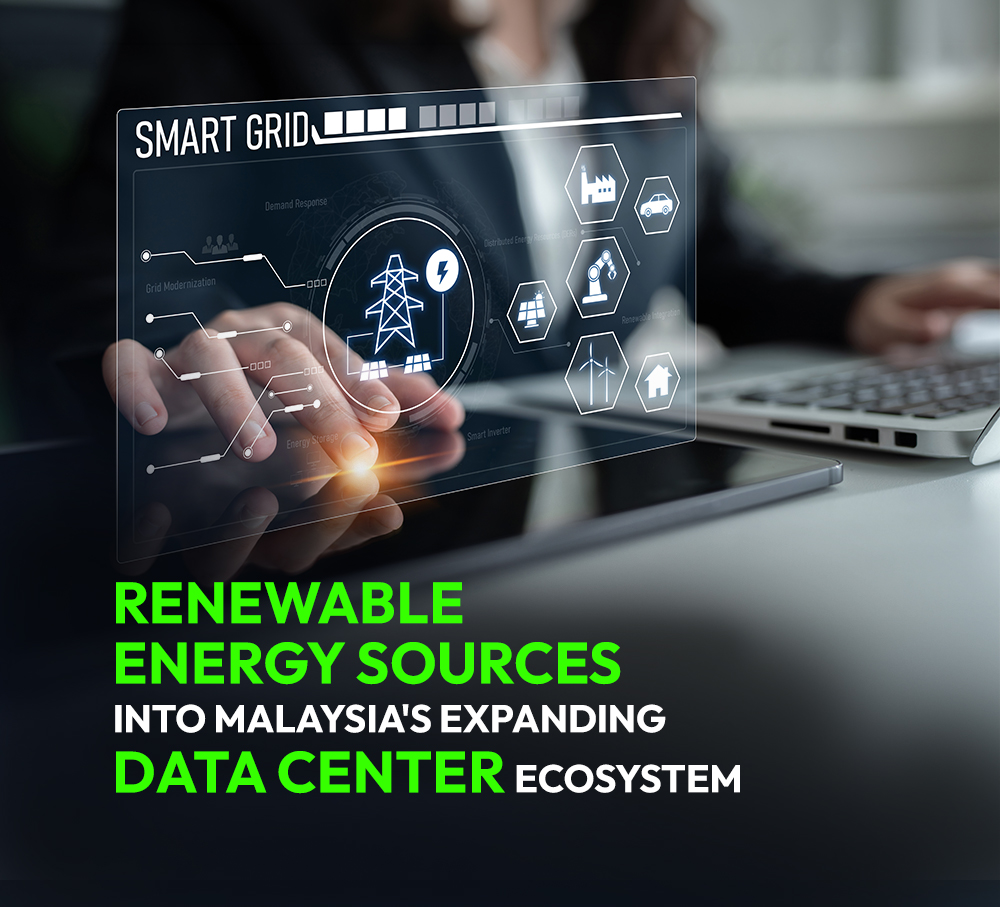
Malaysia records steady expansion in its data center industry. Recent figures place the market value at around $6 billion in 2025. Forecasts point to growth beyond $11 billion by 2031. Electricity requirements increase quickly at the same time. Projections suggest demand could approach several gigawatts by 2030. The rise comes from higher AI processing needs and broader adoption of multi cloud strategy approaches among businesses.
Solar power, hydropower, and wind energy serve as practical, clean alternatives. Data center operators turn to these resources to bring down their carbon emissions. The shift also supports more stable expenses in the long run and responds to client expectations for responsible practices.
A thoughtful combination of these energy sources reinforces Malaysia’s data center network. It contributes to the nation’s plans for energy change and helps advance digital economic activities.
Overview of Renewable Energy Integration in Malaysia’s Data Centers
Market and Power Context
New facilities are spread throughout the country. IT load capacity grows at a fast pace. Overall power consumption linked to data centers shows a clear upward movement toward 2030. The existing electricity network experiences an added load. Fossil fuel sources supply more than 80 percent of electricity.
Key Challenges
Costs for electricity are rising. Reports indicate expected hikes range from 10 to 14 percent in coming years. Network improvements require both funding and scheduling. Variable output from renewable sources creates the need for additional measures. Storage options or backup systems help deliver a consistent supply.
Policy Framework
Malaysia follows the National Energy Transition Roadmap. The plan targets 70 percent renewable energy by 2050. Specific schemes support corporate access to clean power. The Corporate Green Power Programme and the Corporate Renewable Energy Supply Scheme create channels for direct agreements with renewable generators.
Emerging Trends
Long-term power purchase agreements are increasing in number. Utility-scale solar developments expand across suitable locations. Global technology companies establish commitments to renewable supplies to fulfill their internal emission goals.
Strategic Importance
Renewable adoption allows Malaysia to develop as a sustainable digital center in ASEAN.
Key Strategies for Integrating Renewables
On-Site Solar Generation
Solar installations appear on building roofs, open ground areas, or adjacent land plots. They supply electricity on location. Designs scale easily to fit growing campuses.
Power Purchase Agreements (PPAs)
Operators sign long-term deals for virtual or physical delivery. They guarantee access to verified renewable electricity generated elsewhere.
Energy Storage and Hybrid Approaches
Batteries store surplus generation for heavy demands or after dark. Hybrid systems link renewables with grid supply or conventional backups to avoid interruptions.
Efficiency Enhancements
Improved cooling techniques, automated controls based on data patterns, sectional construction methods, and improved power usage effectiveness values help contain total consumption. Solutions in cloud orchestration and multi cloud management make it simpler to coordinate renewables with daily operations.
Coastal zones hold promise for offshore wind development. Regions with suitable water resources can incorporate hydropower for a more constant base supply. These additions improve diversity in the energy arrangement.
Practical Steps for Implementation
Assessment and Planning
The process opens with a thorough review of current energy patterns and a detailed breakdown of usage. Site conditions receive evaluation, and a dedicated study examines renewable possibilities.
Partner and Procurement
Work with experienced and certified developers. Obtain necessary approvals through PPAs or the Corporate Green Power Programme. Agreement documents specify quantities, rates, and periods with clear language.
Infrastructure Setup
Equipment includes solar modules, energy storage units, conversion devices, and observation platforms. Connections to the main network undergo reinforcement to permit smooth operation between sources.
Testing and Commissioning
Small initial trials take place before full rollout. Technical checks, network standard verification, and complete operational simulations confirm reliable performance under load.
Ongoing Management
Systems track conditions around the clock. Maintenance occurs on set intervals. Personnel receive instruction on procedures. Regular documentation tracks results and regulatory compliance.
Scaling Strategies
Initial deployment covers a single installation. Successful outcomes lead to wider application across additional locations. Existing relief options on taxes and funding programs offset part of the starting investment.
Benefits and Impact on Malaysia’s Growth
Environmental Advantages
Switching to renewables lowers overall emissions. It moves operations closer to net zero objectives and limits reliance on coal and gas. Align your actions with the National Energy Transition Roadmap and accepted standards for environmental responsibility.
Economic Gains
Operating expenditures decrease after the initial period. The improvement draws additional external funding. Activity in renewable project development and upkeep generates employment. Regional suppliers see expanded opportunities. Operators gain advantages in cloud cost optimization when managing their infrastructure portfolios.
Operational Resilience
Multiple supply channels raise the level of energy reliability. Availability rates hold steady, and customer requirements for environmentally sound services receive attention.
National Development
The country builds a firmer standing as a preferred green data center destination in ASEAN. Digital sector expansion continues, and fresh approaches in clean energy technology develop further.
Addressing Barriers and Long-Term Vision
Battery storage capacity reduces the effects of supply variation. Financial support programs ease large initial investments. Updated policies help overcome grid limitations. Toward 2035, renewables could handle a large share of data center electricity. Malaysia would hold a more competitive standing in the surrounding area.
Malaysia-Specific Opportunities and Strategies
Locations including Johor, Cyberjaya, and Kedah benefit from high solar exposure and established transport links. They suit both direct on-site generation and nearby supporting projects.
Initiatives under the Corporate Green Power Programme and Corporate Renewable Energy Supply Scheme, together with tax provisions and dedicated financing lines from the National Energy Transition Roadmap, lower barriers for solar agreements and storage additions.
Cooperation occurs with international and domestic specialists such as TotalEnergies or Shizen Energy. Joint projects deliver appropriate supply solutions and assist with network strengthening. Sites that maintain reduced power usage effectiveness figures and secure renewable coverage appeal to major operators, including Google. Several of these firms examine sizable solar arrangements.
Clear emphasis on renewable components helps obtain further pledges. Individual operations then function as practical references for balanced digital infrastructure development throughout ASEAN.
Shape Malaysia’s Renewable Data Center Future at DCCI Malaysia 2026
The DCCI Malaysia 2026 event assembles participants from different sectors. Representatives from 15+ industries, regulatory bodies, and technical fields meet to review renewable integration in detail.
Discussions cover observed results connected to the National Energy Transition Roadmap. Attendees receive information on network difficulties and methods to extend projects over multiple sites.
One of the key sessions titled, “Driving ASEAN Sustainable Data Centre Growth: The ASEAN Guide for Sustainable Data Centre Development” will specifically focus on aspects like Energy & Renewable Integration, GHG Emissions & Operational Efficiency and more.