

Malaysia’s data center cooling market is set to expand from $0.21 billion in 2025 to $1.07 billion by 2031. This growth occurs at a 31 percent CAGR. AI demands push traditional air cooling to its limits because servers now run hotter and denser than ever before. Operators find it harder to keep equipment stable without massive energy input.
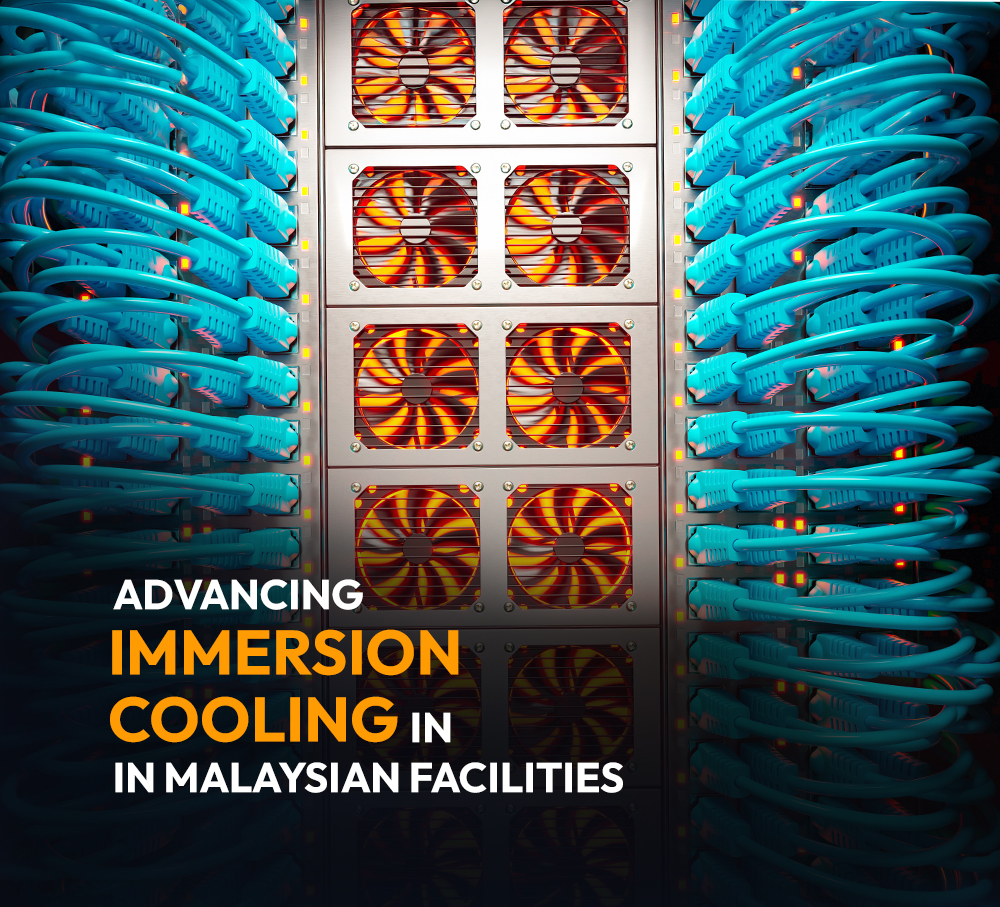
Immersion cooling submerges IT hardware in non-conductive liquids. It provides superior heat removal. The approach offers better efficiency than air or water systems by transferring heat directly at the source.
Advancing immersion cooling in Malaysian facilities enhances performance. It cuts energy use. It supports sustainable digital growth across the country.
Overview of Immersion Cooling in Malaysian Facilities
Market Growth
The Malaysian data center sector experiences rapid expansion. The liquid cooling segment grows at a 26 percent CAGR. Rack densities now exceed 40 kilowatts because of the AI boom.
This shift happens as more companies deploy powerful GPUs that generate intense heat during training and inference tasks. Traditional setups struggle to handle these loads without constant fan operation.
Current Challenges
High energy costs create pressure. Water scarcity adds to the strain. Talent gaps make matters worse. These factors push operators away from air systems. Air systems still hold 71 percent market share in 2025.
Many facilities in hot and humid climates waste power on cooling alone. Water shortages in certain regions limit options for evaporative systems. Skilled workers who understand advanced cooling remain in short supply.
Policy and Investments
Government support arrives through the AI Roadmap. It commits USD 4.3 billion to AI cloud clusters. The focus stays on liquid solutions. These deliver a PUE of 1.03 compared with 1.65 for air cooling. Such targets encourage operators to test new methods that save electricity and reduce overall operating expenses.
Regional Trends
Malaysia grows as an ASEAN hub. Investments flow into Johor and Cyberjaya. Global players such as Google run green immersion pilots in these locations. The areas offer reliable power grids and fast fiber links that suit high-performance computing needs. Local developers see these sites as ideal for scaling operations quickly.
Strategic Role
Immersion cooling addresses tariff hikes of up to 14 percent. It aligns with net zero goals. The technology builds resilient infrastructure. This setup proves vital for edge data centres that process information closer to users. It also supports edge infrastructure within the distributed cloud while enhancing digital connectivity across Malaysia and beyond. Facilities gain the ability to run denser racks without risking overheating or high bills.
Key Strategies for Advancing Immersion Cooling
Single-Phase Immersion
Dielectric fluid baths provide simple heat transfer. The method works for moderate rack densities. Maintenance stays straightforward and requires few special tools. Operators simply circulate the liquid through heat exchangers. This approach fits facilities that want to upgrade step by step without major redesigns.
Two-Phase Immersion
Boiling fluids manage high heat loads. They suit AI GPUs that generate intense power. This option delivers superior cooling performance at larger scales. As the fluid turns to vapor and condenses, it carries away heat very efficiently. The process keeps component temperatures low even during peak workloads.
Hybrid Approaches
Immersion pairs with air backups in some setups. The combination allows gradual adoption inside existing facilities without full disruption. Teams can test immersion on critical racks while keeping the rest on familiar air systems. This reduces risk and spreads costs over time.
Fluid Selection and Safety
Non-toxic and eco-friendly fluids meet local rules. They reduce safety risks and environmental concerns during daily operations. Malaysian standards require fluids that do not harm soil or water if spilled. Certified options also resist fire and stay stable under local climate conditions.
Monitoring and Automation
AI-driven sensors track temperatures in real time. They enable predictive upkeep and help teams catch issues before they grow. Software dashboards alert staff to small changes in fluid levels or flow rates. This data-driven method prevents downtime and extends hardware life.
Practical Steps for Implementation
Facility assessment begins with energy audits. These audits spot high-density zones and confirm compatibility for immersion retrofits. Teams review current power usage and rack layouts to map the best starting points. Vendor and pilot selection rely on certified providers. Small-scale tests measure PUE and ROI before any full rollout. Infrastructure upgrades cover tank installations and fluid circulation systems. Secure data wiping protocols protect information during the change. Training and compliance include staff programs on liquid handling. All work follows DOE standards to keep operations safe. Scaling and optimization rely on phased expansions. Performance tracking lets teams refine setups step by step. Cost management tackles initial investments with available incentives. Long-term savings projections guide budget decisions and show payback periods of two to three years in many cases.
Benefits and Impact on Malaysia’s Growth
Efficiency improvements produce lower PUE values. Power bills drop, and downtime stays minimal. This supports demanding AI workloads that run around the clock. Environmental advantages cut water consumption by up to 95 percent. Emissions fall in line with national sustainability blueprints. Economic gains create jobs in the tech sector. They attract foreign investments and raise competitiveness inside ASEAN. Operational resilience improves heat management for denser racks. Faster innovation becomes possible in cloud services. National alignment strengthens MyDIGITAL and NETR goals. Malaysia positions itself as a green data leader. Future prospects point to immersion powering half of new facilities by 2030. This drives an inclusive digital economy that reaches more businesses and communities.
Malaysia-Specific Opportunities and Strategies
Hub focus takes advantage of Johor and Cyberjaya. These sites provide immersion-ready facilities tied to renewable energy and strong connectivity. Incentive access uses tax breaks under RDCI and green schemes. Funded pilots target AI clusters across the country. Partnership building works with locals, such as MDEC and global firms. The effort creates knowledge transfer and local supply chains. Sustainability integration chooses low-impact fluids. These meet water guidelines and help Malaysia set regional standards. Investment strategies highlight immersion cooling. They help secure deals such as recent billion-dollar AI commitments and fuel further growth.
Don’t Miss the Latest Immersion Cooling Breakthroughs at DCCI 2026
Professionals should mark DCCI 2026 on their calendars. The event brings together the newest immersion cooling breakthroughs. Sessions explore real applications inside Malaysian facilities and show how efficiency and sustainability improve together.
Experts share case studies from Johor and Cyberjaya that show measurable drops in energy use. Attendees learn about fluid advances and automation tools that cut costs and risks in daily operations. Networking sessions connect operators with vendors and policymakers. DCCI Malaysia leads these important conversations. Participation gives teams practical ideas they can apply right away. The summit helps the country stay ahead in data center technology and supports long-term digital growth across the region.